Information to Action is a collection of resources and tools that teams can use to start improving the quality of care they deliver now. Through Information to Action, we will provide dedicated support to teams interested in using the momentum of D2D to move from measurement to improvement. It is also meant to teach us what really works for all AFHTO members to translate Information to Action. The overall goal is to help teams deliver higher quality care. How will we know if it’s working? Hopefully, we will see the results in the data teams submit to future iterations of D2D.
Who is Information to Action for?
All teams are invited to assess how ready they are to be part of Information to Action. Just like with D2D, not all teams will be ready to make this move right away. And just like D2D, teams can start slowly, taking advantage of only those parts of Information to Action that work for them right now.
How will teams move from Information to Action?
Information to Action consists of a menu of activities and supports that interested teams can choose to participate in. For the most part, teams may choose to participate in whichever activities they are ready for. The exception is for some of the more intense supports, which come with some “strings attached.”
How do I get started?
- Start with the”Free-Choice” resources and activities. These are things your team can start doing now – or may already be doing. They have no prerequisites.
- Consider the “Resources with Strings Attached.” These are more intensive supports you might consider signing up for if your team is ready. There is some homework you will have to do to help you prepare for them.
- Decide if your team is ready to access these “strings-attached” resources. Complete your team’s readiness self-assessment, and if it shows that your team is ready to proceed, submit it to AFHTO (via this online survey)
- Want to know more? Check out the Frequently Asked Questions, or contact us.
Free-choice Resources and Activities
Take part in the QI enablers study
- Volunteer to tell the story of your team’s QI journey as part of AFHTO’s QI enablers study. Teams from all stages of the QI journey are needed. This will make it easier to identify which characteristics, processes and tools are truly effective enablers for improving quality.
Access EMR Maturity Development resources from Ontario MD
- Access the EMR Practice Enhancement Program (EPEP) through Ontario MD.
- Complete an EMR progress assessment with the help of OntarioMD staff if needed.
- Sign up for support from the EPEP consultants and/or OntarioMD peer leads to access topic or task-specific support. This support can help you make better use of your EMR in your quality improvement efforts. The EPEP consultants will help teams narrow down their focus to specific tasks that can be achieved in the context of the improvement initiative.
Administer the Patient Perception of Patient Centeredness Questionnaire (PPPC)
- Teams rightfully pride themselves on the relationships they build with patients, but most of the data teams use to demonstrate their value is the number of patients they serve. The PPPC gives you a way to demonstrate the quality, not just the quantity, of service you provide.
- Please consider sharing your results with AFHTO staff, to be used as part of the QI enablers and patient priorities studies. Our hope is that teams will have completed their patient-centeredness survey by May 2018.
- Email us to get a copy of the questionnaire.
Participate in Data to Decisions (D2D)
- New to D2D? Check out this one-page infographic for more information, and see the Planning and Preparation page for help getting started.
Access some of the other reporting tools and platforms that are available to your team
- Screening Activity Report (SAR) from Cancer Care Ontario
- Data for some of the D2D indicators comes from this report.
- myPractice report (formerly the Primary Care Practice Report) from HQO
- Data for some of the D2D indicators comes from this report.
- Other reports and platforms listed here.
Strengthen interprofessional collaboration
- Participate in educational webinars on interprofessional collaboration with possible access to CME credits.
- Launch date of webinars to be determined.
- Consider adding measures of interprofessional collaboration to your Schedule A.
- Read what IHPs have told us about what they think is necessary for teams to improve.
- Conduct a team climate survey among team staff.
- You may choose to share your results with AFHTO staff, to be used as part of the QI enablers and patient priorities studies.
Access continuing medical education for physicians
- Enrol physicians in in-person CME-accredited sessions led by HQO and OCFP based on Practicing Wisely curriculum. Register or learn more here.
Access privacy training and resources
- Access a CME accredited privacy training module and resources through Ontario MD. The module and resources are designed to facilitate your use of technology and ensure accountability that Health Information Custodians have with respect to the appropriate collection, viewing, use, disclosure and safeguarding of personal health information.
Resources with Strings Attached
The resource described below (Lean training and Practice Facilitation training) are more intensive and require some investment on the part of AFHTO and the participating teams. To make sure that everyone gets value out of this investments interested teams will be expected to participate in certain activities, including some of the “free choice” activities described above. At a minimum, teams participating in any of the services below will be asked to do the following:
- Develop a team-specific improvement focus. Work with your clinicians, IHPs, QIDS Specialist (if you have one), and anyone else on your team who has an interest in quality improvement. Choose a focus that is manageable and meaningful for your team, appropriate for your setting, and relevant to your patients’ needs.
- Contribute data to D2D.
- Complete the EMR progress assessment with the help of OntarioMD staff if needed,
- Conduct a Team Climate survey in their team.
- Administer the Patient Perception of Patient Centeredness Questionnaire (email us to get a copy), and
- Participate in an interview later in the Information to Action process to share what changed (if anything) in your team’s area of focus on improvement.
Lean Training
- NOTE: Winter 2018 Lean training session has concluded. Stay tuned for future opportunities!
One person from each participating team will be invited to participate in one 5-day on-site training session plus remote coaching for 2 months (up to 6 trainees). The participant will be awarded a Green Belt on completion of the program. Unsure if LEAN training is right for your team? Read more about it here.
- Team expectation: In addition to the minimum expectations described above, participating teams may need to cover travel and accommodation for the LEAN trainee. Participating teams will also need to cover tuition for any staff they send for LEAN trainee beyond the 6 positions available. Teams will also be expected to collaborate with their trainee in improving performance in the area of focus identified by the team and the trainee.
LEAN coaching will be available at no charge on a weekly basis for 8 weeks for teams enrolled in LEAN training. Additional coaching may be available at a charge to participating teams beyond the period offered through Information to Action. Join the discussions that launch a Quality Improvement Community of Practice (CoP), focused specifically on QI. It is open to all interested teams, especially those taking advantage of the LEAN training.
- This CoP will build out from the LEAN coaching and will be facilitated by AFHTO’s clinical KTE specialist.
- You do not have to participate in the LEAN training or coaching to be part of this CoP.
- As in other CoPs, members of the community will be supported by facilitators and themselves in navigating available resources such as those listed here and those that might be available in specific LHINs or for specific topics, such as:
- cSWO benefits realization analysts
- QI coaches in South West and Champlain LHINs
- Experience-Based Design and/or Brief Action Planning training from various LHINs (e.g., South East, South West, Toronto Central)
- HQO QIP staff and Cancer Care Ontario’s primary care cancer lead
- Teams interested in topics supported by these various coaching resources (among others) will be introduced to those providing the resources, to make it easier for teams to take advantage of these services.
- The CoP will also support teams in monitoring progress against milestones on a monthly basis and/or troubleshooting challenges.
Progress in translating Information to Action: Interested teams may want to review their progress and that of their peers at special forums throughout the year. There may also participate in the orientation of the next cohort of interested participants, tentatively planned for the 2018 AFHTO conference.
Practice Facilitation Training for QIDSS
- NOTE: The Practice Facilitation Training sessions are finished. If interested, please consider contacting the Centre for Effective Practice to learn about other opportunities for this.
Offered in partnership with the Centre for Effective Practice (CEP), this is a free, three-day training session in Toronto for QIDS Specialists and other QI professionals (QIDSS-like folks). The course will introduce you to academic detailing, a service that offers one-on-one educational outreach visits to family physicians to discuss objective, evidence-informed ways to improve care quality. By taking part in the training, QIDSS and QIDSS-like folks will be more confident working with clinicians about how to apply evidence and data to their practice. They’ll also learn about the CEP’s academic detailing service and how this could benefit their teams.
- Team expectation: In addition to the minimum expectations described above, participating teams may need to cover travel and accommodation for the trainee. There are a limited number of spaces, and these are available on a first-come, first-served basis.
Self-Assessment of Readiness
Interested teams are invited to complete a self-assessment of their readiness to succeed in this initiative by asking themselves the following questions. Once you have completed the self-assessment, send in your answers to us through this online survey..
Have all of our leaders agreed to participate in this initiative?
You know who your leaders are. Are they ready to make sure that the team follows through on their home work?
Do your team’s physicians know what their role is?
Is there at least one physician who agrees to champion the project and encourage other team staff and physicians to participate? If not, is there at least one physician who agrees to accommodate the project and allow access to their staff, patients and/or data as necessary for the project to proceed?
Can you agree on at least one problem you all want to solve?
There is likely no end of things that bother someone or other on your team. Is there one problem (or possibly 2) that you all want to do something about sooner rather than later? You do not need to have a fully defined “QI project” or research question – you will do that as part of this initiative. You just all have to agree that you want to take on this problem.
Does your QIDSS (or similar person) have access to your EMR?
It is almost certain that you will need to get at your EMR data to succeed with this. Administrative staff supporting the initiative (usually QIDSS or similar person) must have be able to extract data from your EMR. Have you got that set up yet or at least in progress?
Are you prepared to do your homework?
Your part in the initiative involves completing some baseline activities to measure and increase your access to data. These activities are listed below. Is your team ready to do these things as best you can?
- Sign up for your team’s myPractice (formerly Primary Care Practice Report) and Screening Activity Report (SAR). Encourage all individual clinicians to sign up for their individual-level reports either directly or via a delegate.
- Complete the EMR progress assessment from Ontario MD.
- Contribute to D2D: Contribute as much data as you can to the next iteration of D2D.
- See the Planning and Preparation page to get started now.
- Plan to take action on at least one area reflected in D2D: Choose an improvement focus based on at least one aspect of your team’s D2D performance, in addition to any other topic you wish to examine.
- Share experience: Join your fellow participants to share your experience in various forums such as surveys, one-on-one discussions, focus groups and/or presentation at the next AFHTO annual conference.
Are you still working on getting ready?
Maybe your team wants to do some of your own work first before signing up for this initiative. Perhaps you have other pressing issues. If your team is not yet ready to participate in this improvement initiative, all is not lost. You can still participate in the improvement activities available to all members. You can also work on the criteria above at your own pace. There will likely be additional supports for improvement after the initial cohort for this improvement initiative is completed. The exact nature of the second cohort depends on how things go with the first. In addition, you may be able to make progress on your own even outside the improvement initiative because some of the services/supports are already available to members on request.
Frequently Asked Questions
As they think about signing up for this initiative, members have been asking questions. These are summarized below. They will be updated throughout the planning and implementation of the initiative.
What is the charge for participating?
The supports are free for this first cohort with the possible exception of some travel/accommodation costs for training activities.
How much information should we include in the readiness self-assessment?
The readiness self-assessment is available to help you decide how ready you are, so you can include as much (or as little) information as you like. Keep in mind, only teams who complete the readiness self-assessment will be eligible to participate in the “strings attached” resources.
How do teams sign up for the “strings attached” resources and how are the teams chosen?
Teams were invited to sign up for the “strings attached” resources (LEAN training) after the orientation session at the AFHTO conference. Teams were chosen on a first-come, first-served basis.
What if we don’t have very good performance?
Performance is NOT AT ALL a criterion for participation.
What if our team and our physicians have different priorities?
If the team and physicians are not yet in agreement on a priority problem but can agree on one problem they want to work on together and there is at least one physician who is supportive, you may decide you are ready to give this a try. Or you may decide to take a bit more time to work on getting to that point on your own before you enrol in an initiative like this. Many of the free choice supports are already available to all teams and may be useful in getting over this hurdle.
What if we don’t have a QIDS Specialist?
You don’t need to have a QIDSS to participate. In fact, you may find that that Information to Action will helps you cope without a QIDSS even better than you already are doing. If you don’t have a QIDSS, you will just have to ask someone else on your team to be the point person to support the data access/decision-support functions within your team.
Can we sign up as a group of teams or with non-AFHTO providers?
For sure!
What happens if we don’t improve?
Don’t worry. The goal is to build capacity for improvement activities and learn what it takes to improve. If you have tried something and it hasn’t worked to improve performance, at least you will know one thing NOT to do! As long as there is increased awareness and skill and lessons learned, the program will have met one of its most important goals.
Is this “one and done” or will there be a second cohort?
We hope for many cohorts. Improvement is one of AFHTO’s key strategic priorities. As long as that is true, AFHTO will be in the business of supporting improvement. One of the goals of this first cohort is to learn what it takes to do that well. Supports for future cohorts may or may not look the same as those for this first cohort, depending on what we learn.
What if we don’t want to work on anything in D2D?
Part of the goal is to demonstrate improvement in performance in the next iteration of D2D. To that end, we would prefer teams to choose something relevant to D2D. This will also make it easier to compare progress to others. However, if there really is nothing related to D2D that your team wants to work on, its probably not a deal-breaker to choose something else. Either way, you will be helping achieve the other goals for this initiative ie build capacity for improvement and learn more about what works best to build that capacity. To reach that latter goal, we will evaluate baseline and post-initiative data as well as have much conversation with participants about what worked for them throughout the initiative.
We still have questions!
You can reach out to Laura Belsito, Clinical Knowledge Translation & Exchange Specialist or Carol Mulder, Provincial Lead for the Quality Improvement Decision Support Program.
Overview and Principles of Lean Training
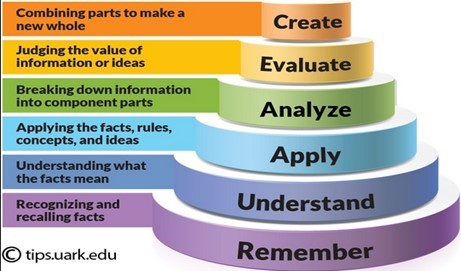
‘Lean thinking’ originated in the automotive sector and is now being utilized by various industries. It is especially valuable in the health care realm, where demand for care continues to grow and budgets are perennially tight, making both effectiveness and efficiency vital. “Lean” gives this industry not just a set of tools to use and procedures to follow, but a comprehensive and integrated thought process, culture and system of beliefs in the pursuit of improved patient care within available resources. The result of Lean Healthcare is a process that delivers value without waste, with high quality, at a low cost. A Lean Tool Box is available to support the elimination of waste and the streamlining of process flows. In health care, one must always remember that the product (laboratory test results or samples) or service (patient care) can make the difference between life and death. The needs of the patient are paramount. The Lean Sigma Green Belt program is designed for Healthcare professionals, to discover ways to implement core Lean concepts, tools and practices to optimize and error-proof care-critical business processes and create ongoing and sustainable improvements. Application of the knowledge and skills gained will improve primary care teams for all staff from those delivering direct care to the Executive Director, as well as the care delivery for all patients. Lean is predicated upon meeting the Voice of the Customer, and the instructors will utilize these principles to deliver relevant participatory curricula grounded in adult learning principles. The objectives for each section of the curriculum are designed according to Bloom’s Taxonomy, maximizing the experience and outcome of learning for each student.